Have you ever felt like your training just hits differently depending on the week???
Some days you feel strong, powerful and unstoppable…
Other days everything feels heavier, slower and harder to recover from.
That’s not in your head, it’s what is happening in your body.
Understanding your menstrual cycle isn’t about limiting what you can do. It’s about training smarter, reducing injury risk and getting more out of your body long-term.
Your menstrual cycle is driven by fluctuations in hormones like oestrogen, progesterone and relaxin, and these don’t just affect mood or energy.
They influence:
And that last one is where injury risk becomes important.
So, let’s break down the stages:
Training tip:
Focus on lower intensity training, recovery and movement that feels good.
Training tip:
Great time to build strength, increase intensity and push training. Some research shows that strength training during this phase results in greater increases in muscle strength when compared to training in other stages of your cycle.
You are primed to train hard in this stage, oestrogen helps you recover better and faster. Take advantage of this!
Training tip:
Maximise your performance here (it’s a good time to check those 1RM’s) due to a release of testosterone, but be mindful of technique and control due to increased injury risk.
Training tip:
Dial back intensity slightly, focus on control, recovery and consistency.
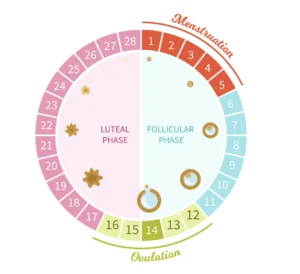
Research shows that ACL injury risk is highest during the pre-ovulatory phase (the late follicular phase, or simply just before ovulation).
This is when:
This combination can lead to:
There is also emerging evidence that injury risk may increase again during the mid-luteal phase (5-9 days post ovulation), when hormones like progesterone and relaxin peak.
This phase has been linked to:
It’s not just ACLs.
Women may be more likely to experience soft tissue injuries (muscle injuries, tendon irritation) during:
Why?
Because hormonal changes can impact:
Meaning your body may not handle the same training load the same way across the month.
This doesn’t mean you should stop training at certain times. It means you should adjust how you train.
Ignoring these patterns can lead to:
Sound familiar?
Here’s how we approach it…
Start noticing patterns:
Awareness is step one.
During pre-ovulatory and late luteal phases, consider:
A strong, resilient body is your best protection.
Focus on:
This reduces load on vulnerable structures like the ACL.
Pain, tightness or reduced performance isn’t random.
It’s feedback.
The earlier you address it, the easier it is to manage.
Your menstrual cycle isn’t a weakness. It’s a performance variable.
When you understand it, you can:
And consistency is what actually drives results.
If you’ve been dealing with recurring injuries, frustrating setbacks or unpredictable performance…
It might not just be your training program.
It might be when you’re training the way you are.
At Invigorate, we don’t just treat injuries, we look at the full picture. That includes: training load, movement patterns and yes, your cycle
If you want to better understand your body and train without constant setbacks make sure you book in with our team today or send us a DM to get started.