
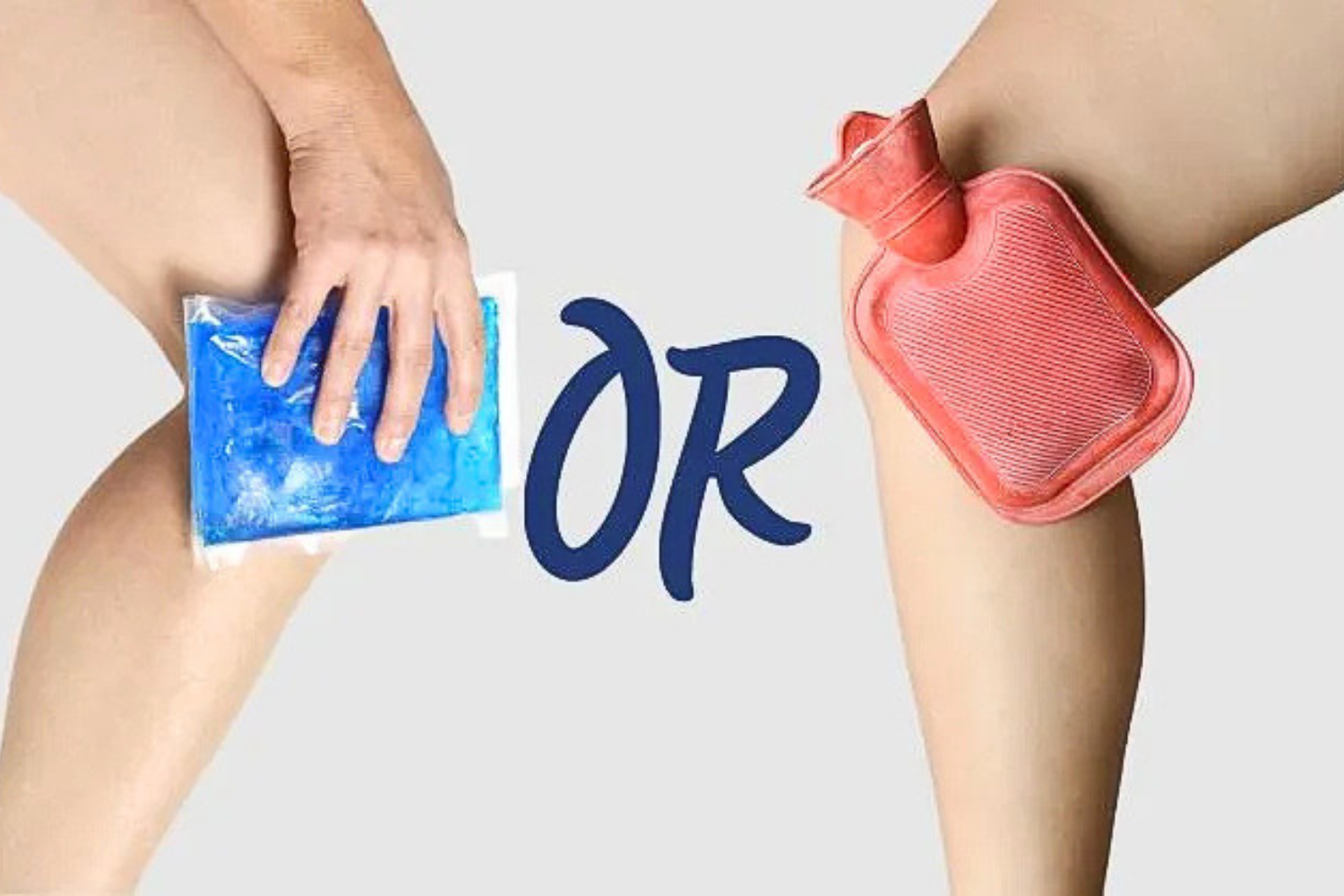
The age old question….
You roll your ankle at training, hobble home and then stand in the kitchen staring at the freezer in one hand and the heat pack in the other. Classic.
You’ve been told both. You’ve probably tried both. And if we’re being honest, you’re not totally sure either one was actually doing anything.
This is one of the most common questions we get asked in clinic. And the answer is actually pretty simple once someone explains it properly. So let’s do that.
The age old question….
Most people assume it’s a coin flip. It’s not. Using heat on a fresh, swollen injury or icing something that’s been tight for weeks can both slow your recovery down.
Here is what goes wrong when people guess:
Good news though. Keep reading and we will sort it out right here.
Ice is your go-to in the first 48 to 72 hours after a fresh injury. Think a rolled ankle after Saturday’s game, a knock to the knee or a muscle you felt go mid-sprint.
What it actually does is reduce blood flow to the area, which limits swelling and dulls the local pain. That is why it feels better almost straight away.
A few things worth knowing:
Ice is a great short-term pain management tool. It is not a treatment on its own.
Heat works best when the issue is not swelling but stiffness. That tight hamstring before training, the lower back that seizes up after a long day, the shoulder that has been grumbling for a couple of weeks.
Heat increases blood flow and helps muscles relax, which is exactly what you want when the problem is tightness rather than acute inflammation.
One important note: do not fall asleep with a heat pack on. It sounds obvious, but we have seen it go badly. Set a timer.
Print this out. Stick it on the fridge. You’re welcome!
| ICE | HEAT | |
| When to use | First 48 to 72 hours after a fresh injury | Chronic stiffness, muscle tightness, old niggles |
| What it does | Reduces swelling and numbs local pain | Relaxes muscles and increases blood flow |
| How long | 10 to 15 min with a cloth barrier | 15 to 20 min, never while sleeping |
| Avoid when | Skin is already numb or over open skin | There is active swelling or an open wound |
Because most of us grew up being told to RICE everything. Rest, Ice, Compression, Elevation. It has been the go-to advice for decades and while it is not completely wrong, sports medicine has moved on.
The newer framework being used in elite sport is called PEACE and LOVE. Yes, that is its actual name. It acknowledges that the body’s inflammatory response is part of how you heal, and that aggressively icing it down early can work against you.
What actually makes a difference in recovery is understanding a few things properly:
An ice pack cannot work that out for you. That is what a proper assessment is for.
Ice and heat are reactive. They help you manage symptoms in the short term, which matters, but they do not fix what caused the problem in the first place.
The people who recover well and stay recovered are usually the ones who:
At Invigorate, we are not just trying to get you out of pain. We want you performing better than you were before the injury happened. That is the standard we hold ourselves to.
At Invigorate Health and Performance, we do not just look at where it hurts. We start with you as a whole person, work out what is actually going on, build you back up properly, and support you long after you feel better.
Whether it is a fresh injury from the weekend, something that has been nagging for months, or you just want to understand your body a bit better, we would love to help.
Book an assessment with the team today and let us get you moving well again.
If this sounds like what you have been missing, we are here when you are ready.
invigoratehealth.com.au | 02 4880 1622